
Blogs
5 Trends And Tips in Construction Project Management

Martijn Jongen
In construction, managing complex construction projects requires constant adaptation to changing conditions and leveraging new technologies and methodologies. In this article, we discuss five trends in construction project management that are currently transforming the industry and look at their impact on project management.
1. Digitization
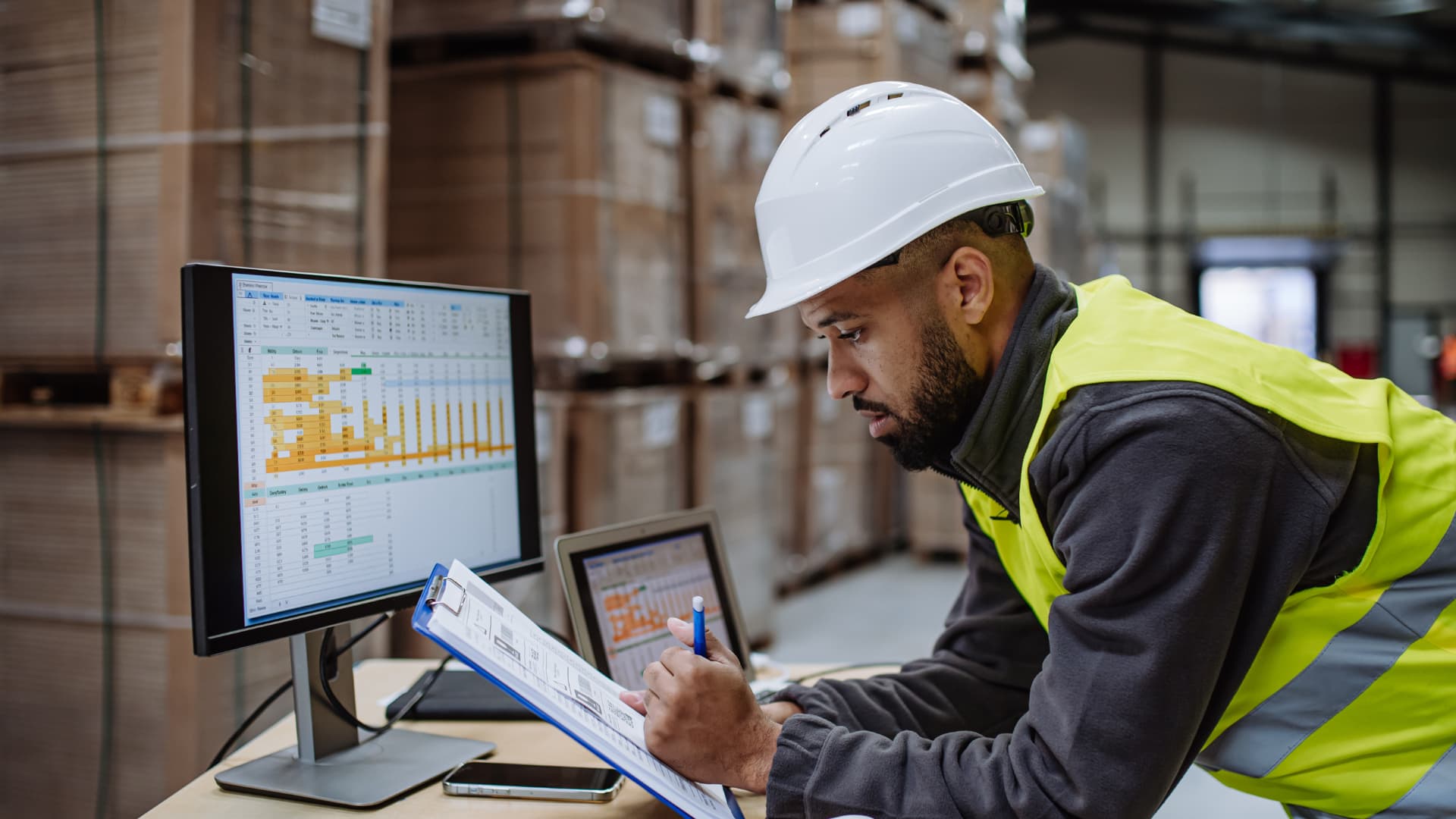
Digitization has had a huge impact on all aspects of our lives, including the construction industry. Project management is benefiting from digital tools such as Building Information Modeling (BIM), drones for inspections, advanced planning systems, and cloud-based collaboration platforms.
These technologies enable project managers to work more efficiently, share real-time information with stakeholders, and make better decisions based on accurate data.
Also read: What is Building Information Management (BIM)?
2. Sustainability
Within the construction industry, there is a growing awareness of sustainability and the need for environmentally friendly construction projects. Project management plays a crucial role in implementing sustainable practices, such as energy-efficient design, material selection, and waste reduction.
By incorporating sustainability goals, construction projects can not only become more environmentally friendly but also provide long-term cost savings.
3. Lean-Build
Lean construction is an approach aimed at minimizing waste and optimizing efficiency in construction projects. Project management according to lean principles includes streamlining processes, better collaboration between all parties involved, and continuous improvement through data analysis.
By applying lean construction methods, as a project manager, you can increase productivity, reduce costs, and improve the quality of your construction project.
4. Innovative Contract Forms
In the traditional construction industry, fixed-price contracts are often used. However, there is a shift toward innovative contract forms such as Design-Build (DB), Public-Private Partnership (PPP), and Integrated Project Delivery (IPD).
These contract forms promote collaboration between all stakeholders throughout the project. For project management, this means a greater emphasis on risk management, communication, and achieving common goals. Flexibility and transparency play a greater role in managing projects under these contract forms.
Tip: Include Intermediate Goals Based On Work Packages In Your Contract
It is important to not only focus on contract milestones in your planning and contract but also link intermediate milestones to work packages. Here you further divide the project into smaller and more manageable pieces. In particular, this helps keep motivation high. But it also allows you to make timely adjustments if the project deviates from the plan.
Take the “realization” for example, this can be a work package. Here you further divide the realization into different phases. For example, building the foundation, building the shell of the building, and building the floor floors. And then finally, of course, finishing your project.
These are examples of work packages that you can include in your schedule and contract in the form of intermediate milestones.
5. Agile Project Management
Agile project management is an approach that is becoming increasingly popular in the construction industry. It embraces flexibility, adaptive scheduling, and rapid feedback cycles.
Project managers apply agile methods to respond quickly to changes in the market, changing customer requirements, and changing external factors.
This approach promotes collaboration among team members, shorter turnaround times, and higher customer satisfaction. For project management, this means the need for frequent monitoring, continuous communication, and the ability to make quick adjustments.
Tip: Transparent Communication With Stakeholders
When it comes to communication within projects, it is important to realize that, above all, people want to stay informed. About the progress of the project and about changes that are there. And that is independent of the role you have in a project.
Whether they are team members, clients, or other stakeholders: everyone wants to be involved in the project and that is only possible if you know what is going on.
In practice, we see that the connection with the project is less in projects with poor (or no or too little) communication. This has enormous consequences for the progress of the project. Because people walk just that little bit harder for each other if the atmosphere is good and people trust each other.
Having a good relationship with each other and involving your people in what is happening is therefore very important. Think about what you’d rather have: reading that your train is delayed by 30 minutes or that your train is “late. People want clarity. Clarity can also be that you ‘just don’t know (yet)’.
Tip: How Do You Force a Decision In The Face Of Uncertainty?
So in construction projects, things are often unclear and you regularly have to deal with several variables and uncertainties. So how do you make a decision anyway?
The most important thing is that you do so based on data that is available at the time. The better and more current it is in terms of time, money, scope, and risk management, the better able you are to make a decision.
But sometimes you have to make a decision when you have very little information. In that case, it helps tremendously if you’ve done it before. In construction, experience from previous projects is an important component, precisely because of all those uncertainties.
Conclusion
To be successful in keeping construction projects manageable, as a project manager you have to be aware of developments in your industry and be willing to embrace new methodologies and technologies.
By using digital tools, lean construction methods, innovative contract forms, and agile project management, you are better able to manage your project more efficiently, cut costs, and improve quality. This way you can meet the changing demands of clients and stakeholders even better.
Would you also like to discover how Simjo supports your construction project?
Simjo is project management software specifically designed for project managers and project teams in construction. See how Simjo simplifies your work here. Or sign up as a Simjo tester. We will keep you informed about the development of Simjo and you will be one of the first to use new functionalities.
-

9 Ways Big Data is Optimizing Construction Project Management
Read article -
Tips For Construction Budgeting
Read article -
Simjo 2.0: get a grip on your construction project with integral detail information
Read article -

The importance of quality control in construction projects
Read article -
Everything you need to know about the Gantt chart
Read article -
Benefits of Simjo Construction Planning Software
Read article -

Practical Tips on Assembling a Successful Construction Team
Read article -
How Do You Create a Construction Project Framework?
Read article -
5 Tips To Successfully Complete Your Construction Project in The Face of Adversity
Read article -

What is Building Information Management (BIM)?
Read article