
Blogs
Tips For Construction Budgeting


Martijn Jongen
Budgeting is an essential part of project management in the construction industry. The right budget makes the difference between a successful project and a financial fiasco. In this article, we discuss key aspects of budgeting for construction projects, with a focus on the role of project managers.
What is budgeting?
Budgeting is the process of estimating the costs associated with a project. This includes not only direct costs such as materials and labor but also indirect costs such as overhead, permits, and contingencies.
Project managers must prepare a detailed and realistic budget to ensure that the project stays within its financial boundaries.
The importance of a good budget
A good budget has several benefits:
1. Financial Control
With a clear budget, you are better able to keep an eye on expenses and ensure that you stay within the limits.
2. Risk Management
By creating a detailed budget, you can better identify potential risks and plan for unforeseen costs.
3. Communication
A well-defined budget helps communication with stakeholders, such as investors and owners, by providing transparency about expected costs.
4. Performance Measurement
A budget provides a baseline by which you measure and evaluate project progress.
5 Steps for effective construction budgeting
1. Define the project scope
The first step in the budgeting process is to define the project scope. This involves clarifying what does and does not fall within your project. A well-defined scope helps identify all the resources and costs required.
Also read: Tips to avoid budget overruns in construction projects
2. Collect data
Collect data on the cost of materials, labor, and other expenses. This can be done by requesting quotes from suppliers and subcontractors. And by using historical data from previous projects.
3. Create a detailed cost breakdown
Based on the data collected, create a detailed cost specification. This includes:
- Material costs – the cost of all materials needed.
- Labor costs – staff salaries and wages.
- Indirect costs – overhead, permits, and other ancillary costs.
- Contingency costs – a percentage of the total budget to cover unforeseen expenses.
4. Establish a time schedule
A time schedule helps keep track of project progress. You integrate the time schedule with the budget to ensure that costs align with your schedule.
5. Monitor and evaluate
Once established, it is essential to monitor the budget regularly. You can do this through progress reports and budget comparisons. Evaluate spending and adjust the budget as needed.
Common challenges in budgeting
1. Unforeseen costs
Unforeseen costs are a common problem in the construction industry. It is important to include a buffer in the budget to absorb these costs.
2. Changes in the project scope
Scope changes can lead to significant budget overruns. Make sure there is a process for managing scope changes, including updating the budget.
3. Unreliable suppliers
Choosing the right suppliers and subcontractors is critical. Unreliable partners can lead to delays and additional costs. Do thorough research on suppliers before entering into a contract.
4. Poor communication
Poor communication between team members can lead to misunderstandings and budget errors. Make sure all team members are aware of the budget and their responsibilities.
Tools and software for construction budgeting
There are several tools and software available that can help project managers with the budgeting process. Here are some popular options:
1. Microsoft Excel
Excel is a powerful tool for creating budgets. It offers the flexibility to create custom templates and analyze data. Note, however, Excel has limitations when used as a project management tool.
Also read: Why Excel is not an appropriate tool for construction project management
2. Construction management software
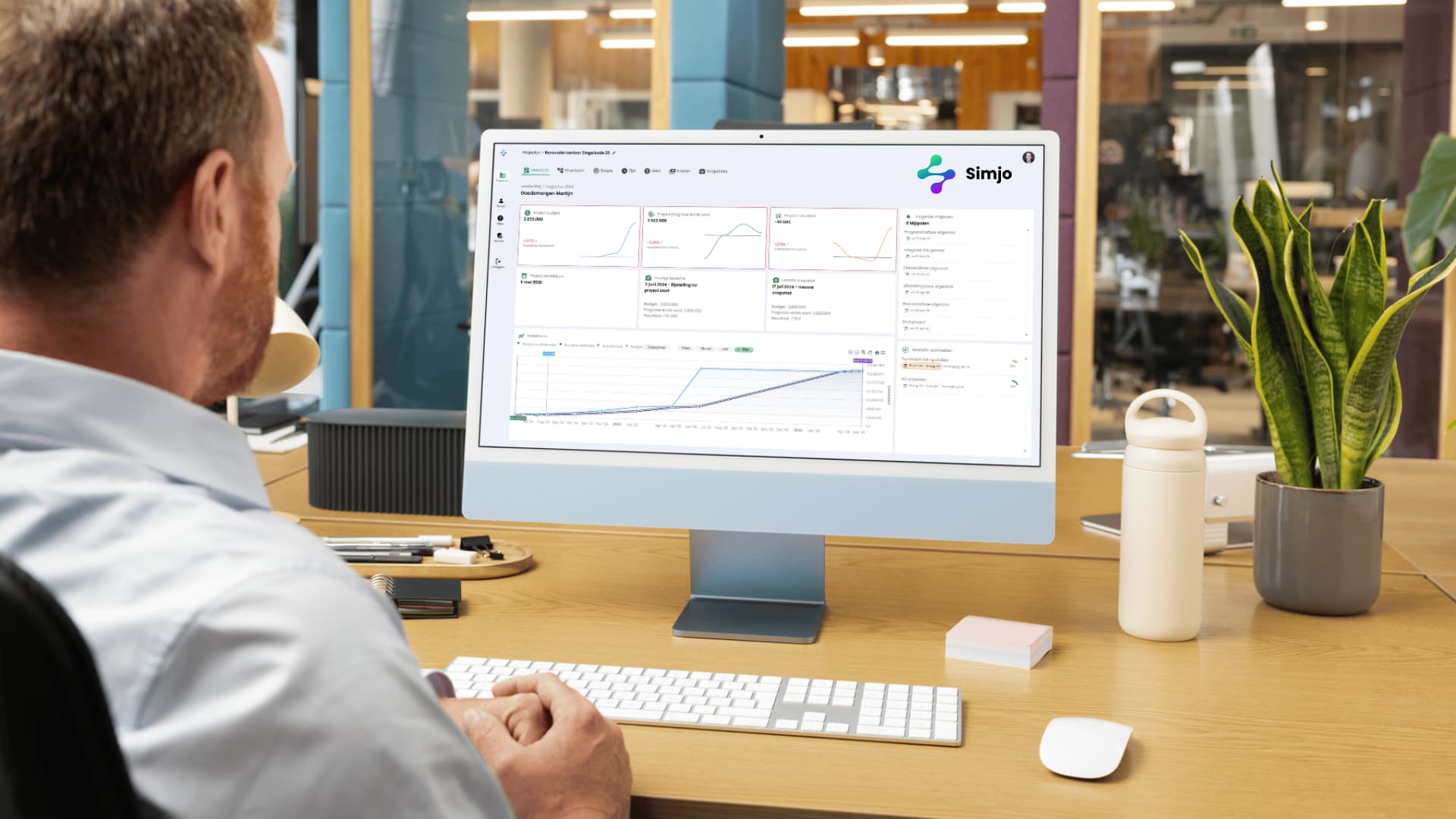
Software such as Simjo offers comprehensive budgeting, planning and reporting features. Designed specifically for the construction industry, this tool increases efficiency.
3. Project management software
General project management software such as Trello or Asana help organize tasks and track budget expenditures. Although they are not specific to budgeting, they can be useful for overall project management. Of course, Simjo is built specifically for project management in construction.
Best practices for budgeting in construction
1. Start early
Start the budgeting process as early as possible. This gives you enough time to gather data and make adjustments.
2. Be realistic
Make sure you make realistic estimates. It is better to propose a slightly higher budget than risk overruns.
3. Involve the team
Involve the project team in the budgeting process. Your team has valuable insights into the costs and risks associated with their specific tasks.
4. Hold regular meetings
Schedule regular meetings to discuss budget progress. This helps identify and address any issues early on.
5. Document everything
Keep a detailed record of all budget-related decisions and changes. This can be useful for future projects and audits.
Also read: The importance of quality control in construction projects
Conclusion
Budgeting is a crucial aspect of project management in the construction industry. As a project manager, it allows you to effectively manage costs, control risks and improve communication with stakeholders. By taking a structured approach to budgeting and using modern tools, you significantly increase the chances of a successful project.
Would you like to discover how Simjo supports your construction project?
Simjo is project management software specially developed for project managers and project teams in construction. Start for free and discover the possibilities of Simjo construction project management software!
-

9 Ways Big Data is Optimizing Construction Project Management
Read article -
Simjo 2.0: get a grip on your construction project with integral detail information
Read article -

The importance of quality control in construction projects
Read article -
Everything you need to know about the Gantt chart
Read article -

Benefits of Simjo Construction Planning Software
Read article -

Practical Tips on Assembling a Successful Construction Team
Read article -

How Do You Create a Construction Project Framework?
Read article -

5 Tips To Successfully Complete Your Construction Project in The Face of Adversity
Read article -

5 Trends And Tips in Construction Project Management
Read article -

What is Building Information Management (BIM)?
Read article